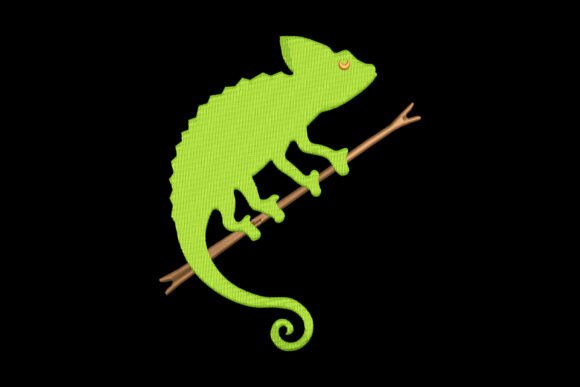
Chameleon
A Design That Hides in Plain Sight
As a designer who’s stitched through countless projects, I often find myself evaluating embroidery designs not just for their visual appeal but for their practicality in real-world applications. Chameleon is one such design that immediately caught my eye—not for its complexity, but for its subtle elegance and adaptability. It feels like a design that could live on a variety of surfaces without overpowering them, which makes it a strong candidate for both personal and commercial use.
The First Impression: A Blend of Mystery and Sophistication
At first glance, Chameleon evokes a sense of calm and intrigue. The design’s shape is streamlined, almost organic, with a natural flow that suggests movement. Its layout is balanced, avoiding the clutter that can make embroidery feel overwhelming. The level of detail is impressive, yet it doesn’t overwhelm the viewer. This balance is crucial for a design that needs to translate well across different fabric types and project sizes.
What stands out most is the way the design maintains a consistent visual tone throughout. Whether viewed from a distance or up close, Chameleon retains its character. This makes it particularly well-suited for products where the design needs to be recognizable yet understated, like a custom tote bag or a personalized gift.
Real-Life Use Case: Custom Tote Bag Design
Let’s imagine a scenario where I’m preparing a custom embroidered tote bag for a client. The design needs to be subtle enough to complement the bag’s aesthetic but distinct enough to stand out. Chameleon fits this requirement perfectly. Its clean lines and intricate patterns offer a touch of sophistication without being too busy.
I envision the design placed near the top corner of the tote, where it can serve as a decorative accent. The neutral palette allows it to blend with various color schemes, making it versatile for different customer preferences. However, I would recommend testing the design on a scrap fabric first to ensure that the stitch density and thread colors work harmoniously with the chosen fabric texture.
Performance in Real-World Embroidery Projects
Chameleon performs well in a range of embroidery projects, from custom apparel to craft fair items. On t-shirts, it adds a refined touch that won’t distract from the garment’s simplicity. On sweatshirts or baby clothes, it offers a gentle, elegant statement that appeals to a broad audience.
For more complex projects like embroidered patches or holiday gifts, the design’s adaptability shines. It can be scaled down for smaller items like caps or aprons, or expanded for larger pieces like table linens. However, I would caution against using it on very small hoop sizes, as the intricate details may become lost or distorted.
When working with textured fabrics, it’s essential to use the right stabilizer to maintain the design’s integrity. Dark fabrics can also pose a challenge, as they may reduce the visibility of the design’s details. Testing the design in black and white mockups before committing to a final product is a smart move to ensure clarity and impact.
Design Considerations for Commercial and Personal Use
For Etsy sellers and small business owners, Chameleon offers a great opportunity to create unique, marketable products. Its versatility allows it to be used across multiple product lines, from handmade products to digital embroidery files. However, it’s important to confirm licensing terms before selling finished items or digital products to avoid any legal issues.
When considering the design’s impact on customer trust and brand consistency, Chameleon’s subtle yet distinctive nature can help establish a cohesive brand identity. It’s a design that feels intentional and thoughtfully crafted, which resonates well with customers looking for quality and authenticity.
From a visual appeal standpoint, the design enhances the overall presentation of a handmade product. Whether it’s a personalized gift or a boutique item, Chameleon adds value by elevating the product’s aesthetic without overshadowing its function.
Practical Designer Notes for Using Chameleon
- Test on Scrap Fabric: Always test the design on a scrap piece of fabric to assess how it looks and behaves in real conditions.
- Check Thread Color Contrast: Ensure the thread colors provide sufficient contrast against the chosen fabric background.
- Review Stitch Density: Pay attention to areas with dense stitching, as they can affect the design’s clarity and durability.
- Confirm Hoop Size: Make sure the hoop size is appropriate for the design’s scale and complexity.
- Inspect Small Details: Look closely at tiny lettering and decorative accents to ensure they remain visible after stitching.
- Use Proper Stabilizer: Choose the right stabilizer to support the fabric and maintain the design’s shape.
- Consider Fabric Texture: Be mindful of how the design interacts with different fabric types, especially stretchy or thin materials.
- Compare Light and Dark Fabrics: Test the design on both light and dark backgrounds to see how it translates visually.
- Confirm Licensing: If you plan to sell finished items or digital products, verify that the design’s licensing allows for commercial use.
Ultimately, Chameleon is a design that rewards thoughtful application. It’s not just about what it looks like, but how it functions in the context of a real project. Whether you’re crafting a personalized gift, a custom apparel piece, or a commercial embroidery asset, Chameleon offers a versatile and elegant solution that can elevate your work with minimal effort.